
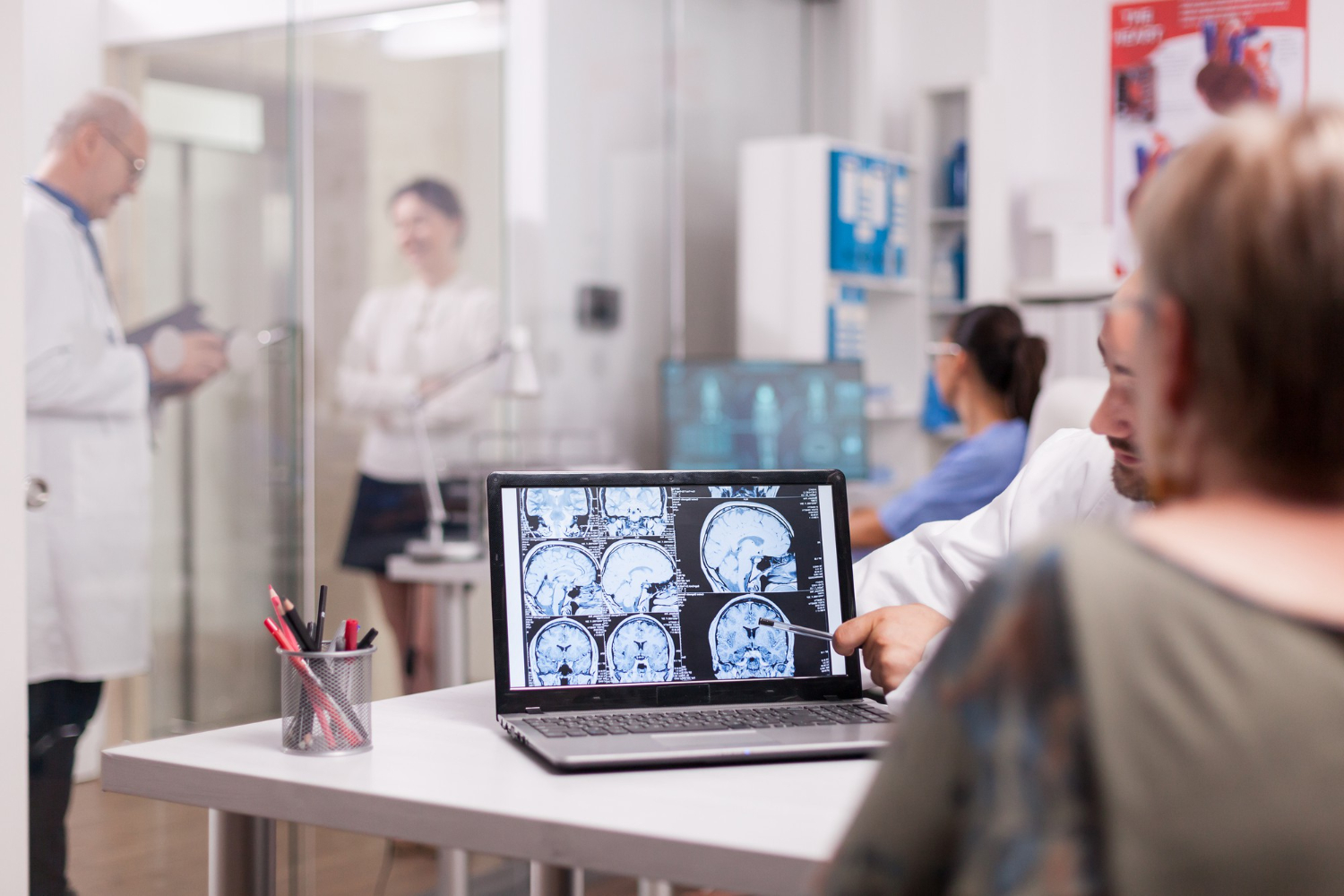
Electromyography (EMG) tests evaluate muscle electrical activity and help identify problems affecting nerves and muscles.
An electroencephalogram (EEG) is a noninvasive test that records the brain’s electrical activity. It is often used to help evaluate seizures, epilepsy, unusual episodes of lost awareness, and other conditions that may affect brain function.
During the test, small electrodes are attached to the scalp using sensors or a special cap. These electrodes record electrical signals from the brain while the patient rests, and sometimes during activities such as opening and closing the eyes, deep breathing, or viewing flashing lights. EEG results help healthcare professionals identify unusual brain activity and support diagnosis and treatment planning.
Electroencephalogram (EEG) tests record electrical activity in the brain and help evaluate seizures, epilepsy, and other neurological conditions.
An Epilepsy Monitoring Unit (EMU) is a specialized hospital unit where patients undergo continuous monitoring to evaluate seizures, suspected epilepsy, and unexplained episodes of altered awareness or unusual movements. It allows specialists to study brain activity and physical symptoms together to better understand what is happening during these episodes.
During an EMU stay, the patient is connected to EEG electrodes that continuously record brain activity, while video monitoring captures physical movements and behavior. This combined video-EEG monitoring helps doctors determine whether episodes are epileptic seizures, identify seizure types, understand where seizures may begin in the brain, and plan appropriate treatment. Hospital stays often last several days, depending on the information needed. Any changes to seizure medication are managed by the medical team under supervision.
An Epilepsy Monitoring Unit (EMU) is a specialized hospital setting rather than a single test. It provides continuous monitoring to investigate suspected seizures and help guide epilepsy treatment.